


Table of Content
Network Designing
What is AI and how is it used in Network designing?
Artificial Intelligence is a technology where computers or robot controlled computers perform tasks that are usually done by humans.
- AI enabled machine learning creates a new approach to network design but the human element will not go away.
- AI can show us new ways of designing faster, more cost effective networks.
- Massive computing power of AI creates a situation where new design and management techniques may be created that humans couldn’t build on their own.
- Not only will the number of people and companies that are able to build and innovate with networks increase, the networks which are designed and developed will be capable of far more than their predecessors.
- Beyond simply designing the network, AI will help manage, maintain and protect it.
- AI powering these algorithms becomes more intelligent, it will find faster and more foolproof methods of anticipating threats and cleaning the network.
- AI will be able to better predict traffic as it collects and analyzes data in real-time, so that network managers are better prepared for big events such as the Olympics, Black Friday and Valentine’s Day, which often put the Internet under pressure.
- In retail, for example, an AI-enhanced network can provide, faster, more accurate product discovery for customers, leading to increased order values and conversion rates for their company’s shopping portals. In the healthcare industry, a network built on artificial intelligence can analyze thousands of documents in minutes to help doctors make more informed decisions about patient care. Meanwhile, in the call center business, networks that leverage AI can more accurately and quickly route and service customer inquiries.
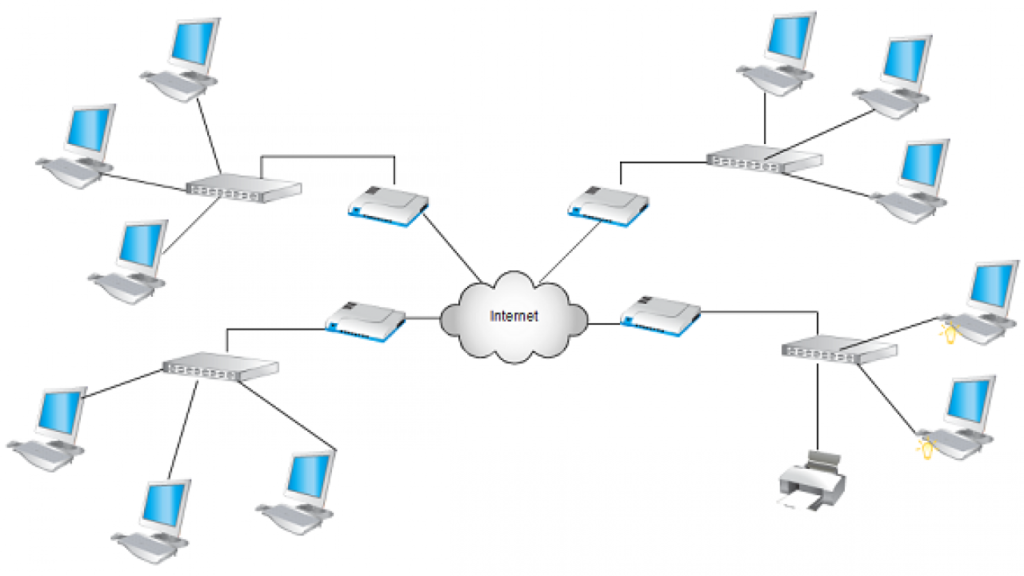
Importance of network design
- Efficient network performance – Fast and smooth networks are smooth. With a plan, it is assured that the network is running with a consistent high level of performance.
- Allows resilience – There should be a good platform for the business network for business and office applications. The primary and highly specified network should be designed to have zero downtime for critical business operations or necessary applications and run at 99% availability for other applications. A well-designed network plan makes sure a network does not lead to the loss of an entire – server session.
- Makes room for scalability – Good network design plans consider possible changes that may occur in your business without the need for a total redesign. An increase number of users when starting out with a plan, and if the time comes when your business expands, then you won’t have to go back to step one all over again.
- Work collaboration made easier – Effective IT resources and network used everyday make an effective team. A properly laid out infrastructure needs to be invested in to get the most out of the work performance. File collaboration, file sharing, real-time update of collective efforts, and other internal tasks should be made easier and more efficient. When the need to work outside the office premise comes, your network design should also be able to address this situation.
- Speed Increase – When the network is suitably designed to the nature of your business, the effect is immediate. It is evident in fast communication, flow, and smooth transactions. In other words, speed becomes an ally. And when this happens, productivity follows suit. Fiber optics makes internet connectivity fast and reliable. Computer networking has enabled a lot of people to work while on the move, and work from home more effectively than it has ever been possible before.

What is network design and what are the benefits?
- Apply personalized solutions – There are different type of businesses and the same framework cannot be applied to all ventures. Tailored solutions are very important when dealing with different types of businesses. This is where network designing comes into play. These solutions will create a rise in productivity while ensuring business safety and agility.
- Increase network security – It is very relevant to keep your network and IT services safe and hence it is not a coincidence that cyber security has gained popularity in recent years. Awareness among companies about value of information and the cost reduction comes with data protection by applying a preventive approach. Outsourcing an experienced network design and integration Services Company can become an advantage. With a balanced and skilled team of IT professionals, they’ll efficiently eliminate any cyber threat with modern technology.
- Optimize your IT budget – One of the greatest advantages of optimizing the IT budget is by reducing expenses. When you choose to outsource your network design, thousands of dollars from your monthly budget is saved. You’ll pay a fixed rate to an experienced provider that will cater your need in a personalized manner instead of an in-house group of network engineers. This is great for businesses with a smaller budget that can’t afford to hire a team of professionals that will only deal with a niche area of your network and data services.
- Improve overall experience – Users are satisfied with the advanced network design and service integration. This technology allows numerous users in your platform without any tech bugs. It also supports multiple devices, an advantage for a multivendor type of business. Relevant information can be accessed from wherever you are and at any given time, improving productivity and eliminating any possible delays by outsourcing these services.
- Enjoy a seamless execution – It’ll also lead to an increased productivity and will help achieve your IT goals in the short and long term. Another one of its key benefits is business continuity, a crucial asset in today’s fast-moving tech-era, in which crises may arise at any given time without notice. In case of occurring errors, solutions are rapidly identified to avoid long-term repercussions by equipping the business with a sturdy network design.

How will network designing through AI be of importance in the future?
- AI builds website graphics – The driving force behind modern web design is AI. Artificial design intelligence (ADI) systems are democratizing website development, generating functional, attractive websites from the bottom up. Wix and Bookmark both offer AI platforms that allow websites to intelligently design themselves; the customer is responsible for choosing the site’s name and answering a few quick questions, but AI will do the rest.
- AI shapes brand image – AI builds the image of the brand in addition to designing the face of web pages. Tailor Brands which is a type of AI can gather data from around the web to design customized logos in seconds, requiring from the user nothing but their business’s name and a quick description of their company or industry. Brand design has become more accessible for emerging entrepreneurs with small budgets and little to no design experience.
- AI designs with efficiency and speed – Designs can be created in a faster and cheaper manner with AI. Vast amounts of data within minutes can be analyzed by AI tools and designs can be suggested accordingly. An example of Airbnb can be taken where this function comes into play and is very helpful where feeding wireframe sketches to AI machines which, in turn, can generate complete images. This capability can be used to create several different prototype designs that can then be A/B tested with users.
- AI automates tedious tasks – Mundane tasks are automated by AI and saves designers the time of carrying out these tasks. Banner and product labels in multiple languages, for instance, designers can outsource the work to AI. The designers, in turn, can approve or reject the suggested graphics, saving them enormous amounts of time.
- AI builds 3D graphics – AI builds dimensional graphics also. AI is being used to build three-dimensional architectural models, facilitating the work of architects by enabling them to create a detailed, lifelike blueprint of their building plan. AI is also being used to build worlds for virtual reality, artificial reality, and mixed reality. Artificial intelligence tools not only design the graphics for these worlds, but they also react intelligently to user interaction and behavior.